
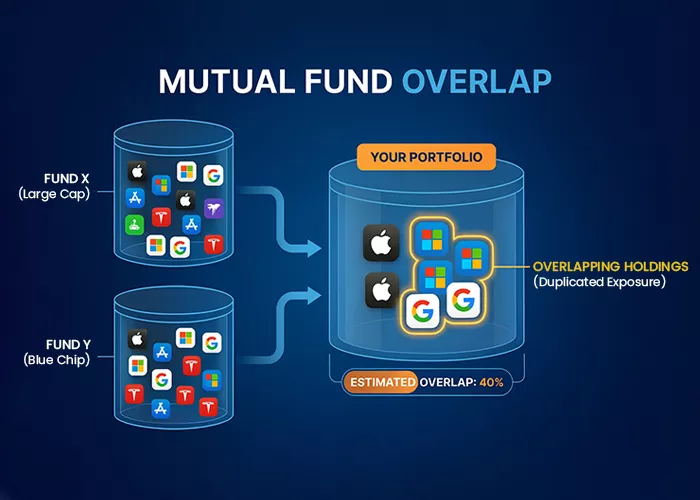
Mutual fund portfolios often look diversified on the surface, yet many investors unknowingly hold multiple schemes that invest in the same stocks. We’ll explore how portfolio overlap happens, why it matters, and how modern mutual fund software makes it easy for MFDs to detect and resolve it in minutes.
What Makes Portfolio Overlap a Critical Issue?
Portfolio overlap reduces true diversification, increases concentration risk, and affects long-term portfolio stability. Many investors unknowingly select funds based on star ratings, popularity, or recent performance. They may purchase five or six equity schemes thinking “more funds mean more diversification,” but the reality is very different. When the underlying holdings repeat across schemes, the investor is simply buying the same companies again and again.
This can lead to:
This is exactly where MFDs can step in and provide meaningful, data-backed guidance.
How Mutual Fund Software for IFA Can Solve This Problem?
MFDs can use the overlap report to quickly identify repeating stocks across schemes, highlight concentration areas, and restructure portfolios for better diversification. When investors understand overlap visually, the conversation becomes smoother. Instead of explaining risk verbally, MFDs can show exact numbers, percentages, and holdings overlap. It builds confidence, reduces impulsive fund buying, and allows MFDs to correct mistakes before they grow larger.
With one report, an MFD can:
How Does Software Simplify Overlap Analysis?
Using MutualFundSoftware, MFDs can:
It transforms a complex analytical task into a simple, user-friendly solution.
What Does a Modern Portfolio Overlap Report Show MFDs?
A portfolio overlap report highlights stock duplication, concentration levels, percentage overlap, sector exposure, and top holding similarities across selected schemes. It’s designed to help MFDs make sharper decisions with complete transparency.
A good report includes:
With clear visuals and numbers, even beginners can understand the importance of diversification.
How MFDs Can Use This Feature to Strengthen Their Services?
This report helps MFDs offer transparent, data-backed recommendation, making it easier for clients to see the value in professional guidance. It positions the MFD as a risk-aware expert rather than just a transaction facilitator.
Investors trust an expert who:
By using overlap analysis, MFDs can present themselves as experts who prioritise client safety and long-term performance.
Conclusion:
Portfolio overlap is one of the most overlooked risks in mutual fund investing. While investors believe they are diversified, they often end up holding multiple schemes with identical underlying portfolios. This affects returns, increases risk, and disrupts long-term planning.
For MFDs, the new Portfolio Overlap Analysis Report is a game-changer. It simplifies research, saves time, and offers clear insights that help clients understand their investments better. With modern software, MFDs can provide clarity, reduce risk, and deliver a more structured advisory experience.